Machinery Safety in Canterbury: Why Engineering Out Risk Matters
Is Your Industrial Machinery as Safe as it Should be?
Across Christchurch and Canterbury, manufacturers rely on industrial machinery every day to keep their operations running. But while equipment may continue to perform its intended function, its safety systems may not have kept pace with modern standards.
Older machinery, outdated electrical controls and reliance on manual safety procedures can expose workers to serious risks, particularly during cleaning, maintenance and fault-finding.
At CJ Phoenix Industrial, we work with Canterbury businesses to identify machinery safety risks and develop practical engineering solutions that improve operator protection, modernise equipment and reduce the potential for costly downtime.
Two recent projects demonstrate why taking a proactive approach to machinery safety is so important.
The Hidden Risks in Industrial Machinery
Our team developed a solution incorporating modern safety technology.
Instead of relying solely on traditional manual isolation arrangements, the proposed improvements included:
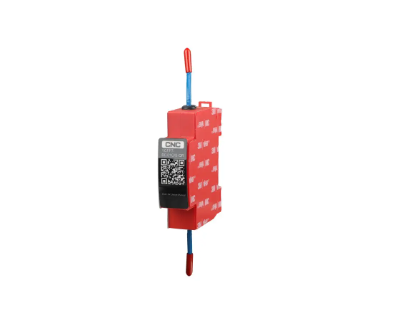
- RFID safety sensors installed on machinery access flaps.
- Automatic stop functions activated when protected access points are opened.
- Safety interlocking to prevent machinery from starting unless the relevant guards are correctly positioned.
By integrating these protective measures into the machine's control system, the design reduces the opportunity for unsafe operation during normal access.
The objective is to make safe operation an inherent part of the machinery's design rather than relying exclusively on operators remembering and following a procedure.
This approach reflects a fundamental principle of modern machinery safety: where possible, risks should be eliminated or minimised through engineering design.
Importantly, interlocked guarding does not replace the need for appropriate isolation and lockout procedures during maintenance or other work where unexpected energisation remains a risk.
Case Study: Bringing an Older Industrial Bandsaw Up to Modern Safety Standards
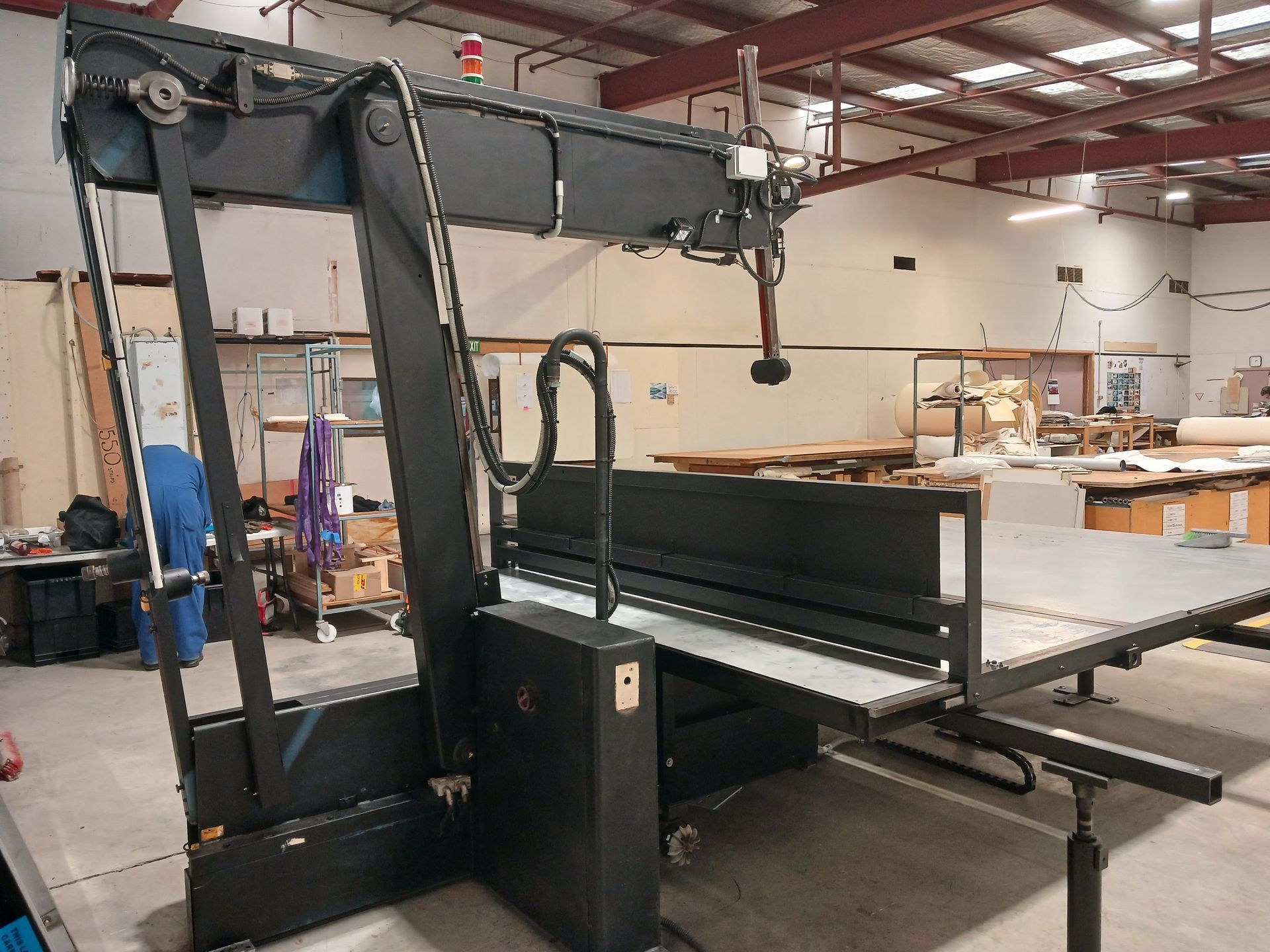
In a separate project, CJ Phoenix Industrial was engaged by a Canterbury manufacturer to upgrade an existing industrial bandsaw.
Unlike the auger project, this upgrade was not prompted by an incident. The customer wanted to proactively improve the machine's safety arrangements and bring its electrical system up to modern standards.
The bandsaw was still operational, but its existing safety controls presented several concerns.
The Challenge: Manual Isolation and Inadequate Guarding
Two significant safety issues were identified:
1. Reliance on manual isolation
The machine depended heavily on operators manually isolating it before accessing hazardous areas.
2. Guards could be opened while the blade was running
The existing arrangements allowed access to the machine while the blade was moving, creating a potentially serious risk of injury.
The electrical control system also contained outdated components that made fault diagnosis and repairs more difficult.
Rather than replace the entire bandsaw, the customer chose to modernise its safety and electrical systems.
The Solution: RFID Safety Interlocks and Modern Electrical Controls
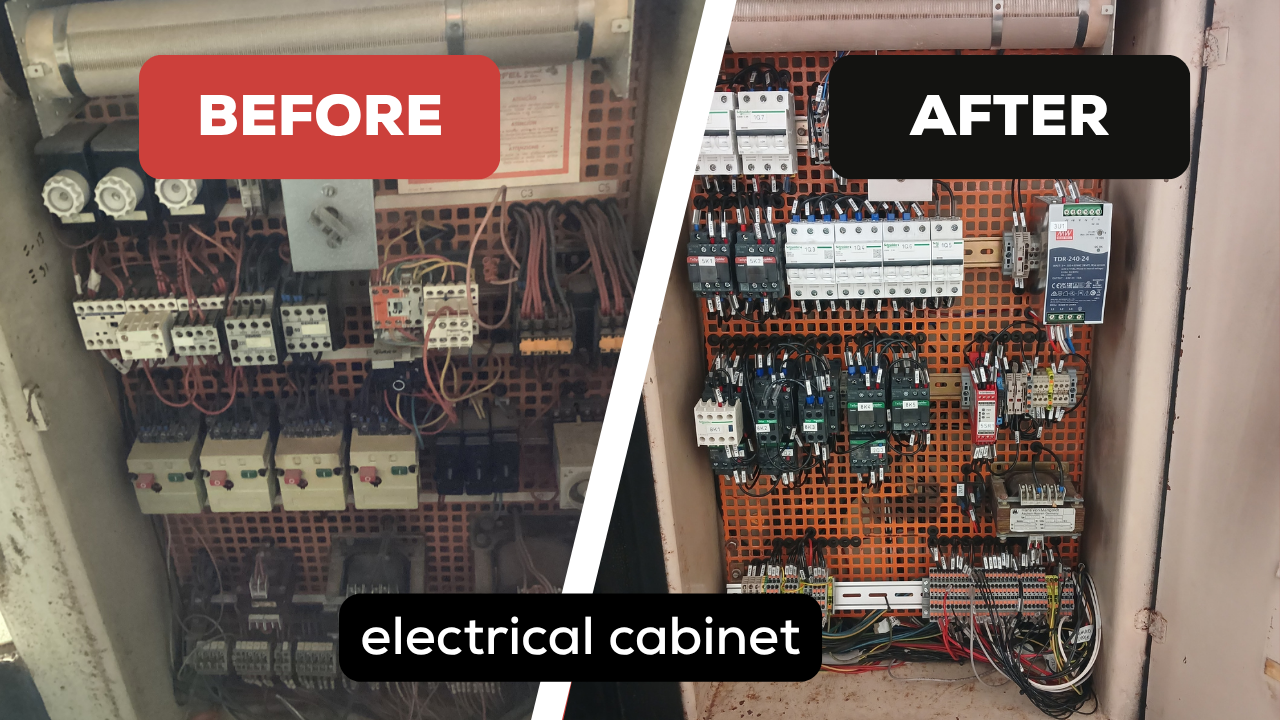
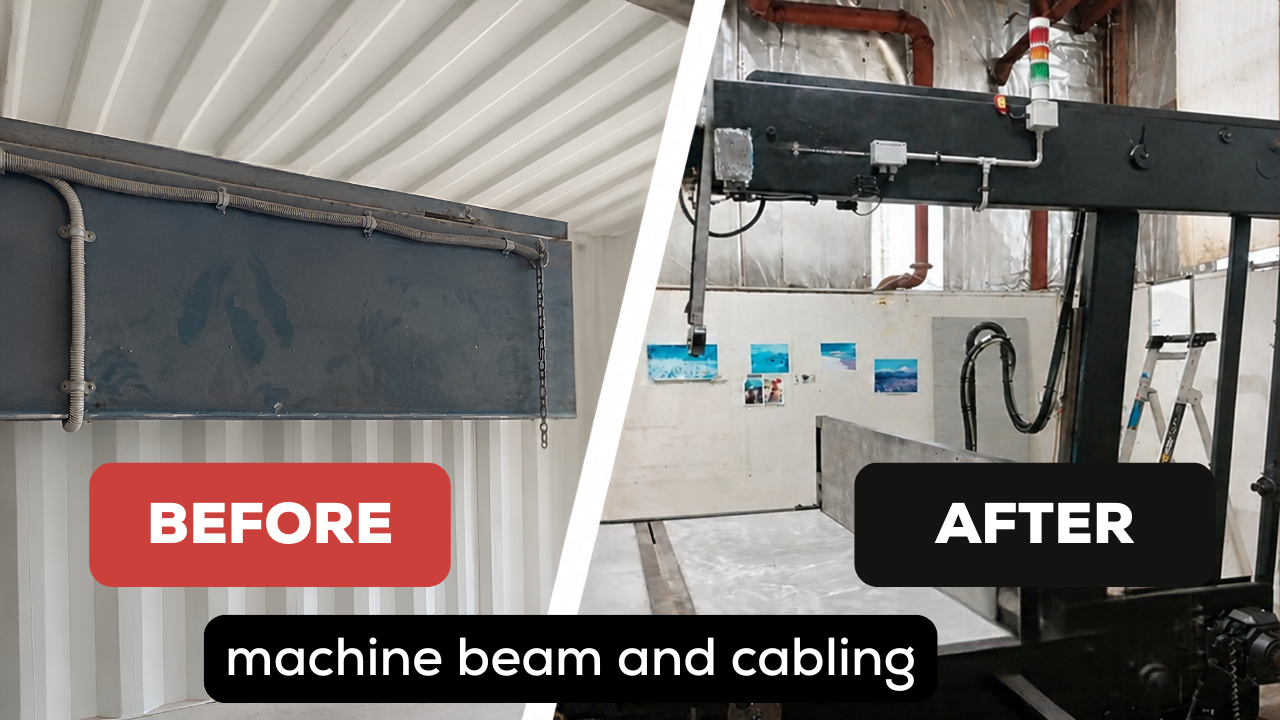
CJ Phoenix Industrial completed a comprehensive electrical and safety control upgrade.
RFID safety interlocks
RFID sensors were installed on the machine's guard covers to monitor whether they were correctly positioned.
With the upgraded system:
- Opening a guard while the blade is running triggers an immediate stop command.
- The machine cannot restart while a guard remains open.
- Once the guard is returned to its correct position, the safety trip must be acknowledged before operation can resume.
This significantly reduces reliance on manual isolation as the primary protective measure during normal machine operation.
Modernising the electrical system
Alongside the new safety system, the team replaced outdated electrical components with modern equipment.
The upgrade was designed to make electrical faults easier to identify, diagnose and repair.
For the customer, this provides practical operational benefits, including:
- Improved fault-finding and troubleshooting.
- Easier maintenance and repair.
- More straightforward replacement of electrical components.
- Reduced potential for extended downtime.
- Improved long-term serviceability of the machine.
The Result: Improved Safety Without Replacing the Machine
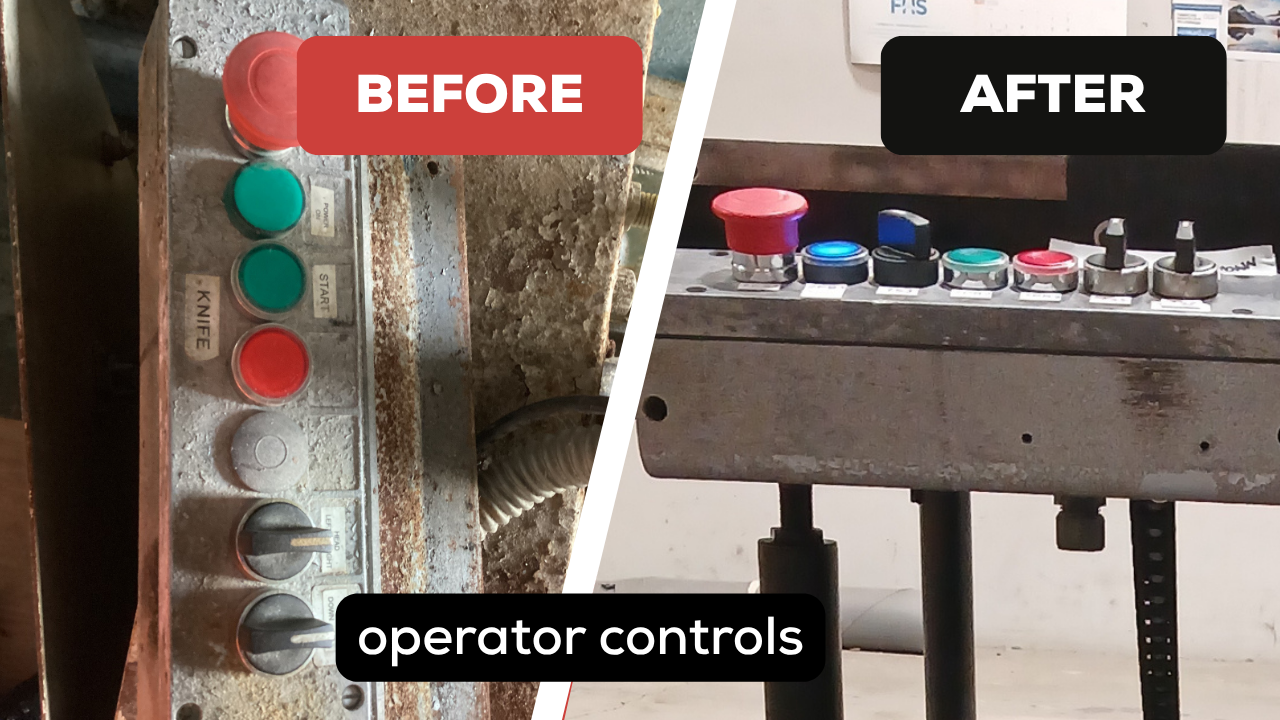
The completed project addressed the customer's primary concerns while retaining the existing bandsaw.
The upgraded safety system prevents operation with guards open and initiates a stop when a guard is opened during operation.
The modernised electrical controls also make the equipment easier to maintain and troubleshoot, helping reduce the potential for unplanned production interruptions.
For the customer, the result is a safer and more maintainable machine without the expense of replacing the entire piece of equipment.
This project demonstrates that older industrial machinery does not necessarily need to be replaced to achieve meaningful safety improvements.
With a suitable assessment and carefully designed upgrades, existing machinery can continue to provide value while offering improved protection for operators.

Could Your Machinery Benefit from a Similar Upgrade?
Book a FREE Preliminary Machinery Safety Assessment with CJ Phoenix Industrial before 30 November 2026.
Our team can help identify potential safety concerns and recommend practical improvements to your existing machinery.
Limited-time Christchurch offer. Terms and conditions apply.
Why Machinery Safety Is About More Than Compliance
Machinery safety is not simply about meeting regulatory obligations. It is about protecting people, maintaining reliable operations and reducing preventable risks.
Under New Zealand's Health and Safety at Work Act 2015, businesses have a duty to manage risks to workers and others arising from their work, so far as is reasonably practicable.
For manufacturers and industrial businesses, this includes identifying machinery hazards and implementing suitable controls.
Depending on the equipment and its intended use, effective machinery safety improvements may involve:
- Fixed or interlocked machine guarding.
- RFID safety sensors and safety-rated control systems.
- Emergency stop systems.
- Electrical control system upgrades.
- Machinery risk assessments.
- Safety system design, testing and validation.
- Improvements to maintenance access and isolation arrangements.
A machinery safety review can help identify areas where existing protective measures may be inadequate and where practical improvements could be made.
Importantly, upgrading machinery safety systems can also provide opportunities to improve reliability, simplify maintenance and reduce future downtime.
Supporting Safer Industrial Workplaces Across Canterbury
At CJ Phoenix Industrial, we understand that every machine and workplace is different. Led by James McVicker, Industrial Manager and Certified Machinery Safety Expert, our team develops practical solutions that improve operator safety, modernise equipment and support reliable operations.
Machinery safety shouldn't depend on an incident prompting change. Taking a proactive approach can help protect your people, extend the life of existing equipment and reduce costly downtime.
Whether you're upgrading older machinery or improving existing safety systems, CJ Phoenix Industrial can help make your machinery safer, smarter and more reliable.
Share article:
Industrial Electrical Automation in Canterbury: Smarter Systems for Safer, More Efficient Operations